What is a strategic roadmap?
A strategic roadmap shows where an organization intends to go over several years and the large pieces of work that will take it there. It is not a project schedule. It has no tasks and no exact dates. What it shows is direction, order and how sure you are about each step.
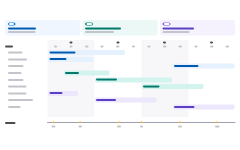
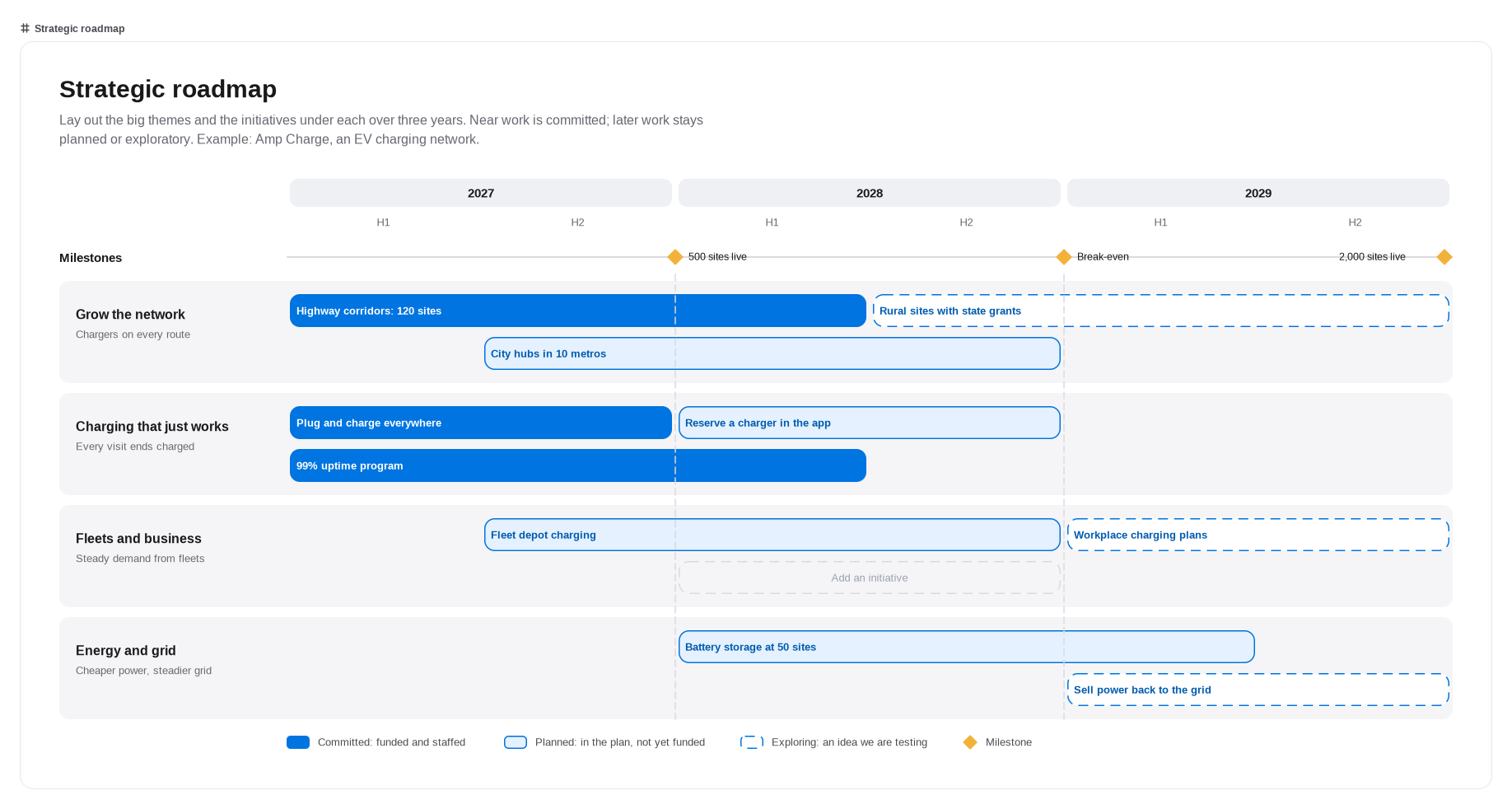
This template lays that out as four horizontal lanes, one per theme, under a timeline of three years split into halves. The example is Amp Charge, an EV charging network, from 2027 to 2029.
Years, halves and milestones
Across the top are three year blocks, each divided into H1 and H2. Half-years are deliberate. Quarters would promise more precision than anyone has about 2029.
The row beneath holds the milestones, drawn as diamonds: 500 sites live at the end of 2027, Break-even at the end of 2028 and 2,000 sites live at the end of 2029. They are the few results the whole plan is judged by, and they give every bar below a reason. Highway corridors with 120 sites is there because 500 sites live is.
Four themes, each with a promise
Each lane is a theme: a lasting area of effort, named with a line that says what it is for.
- Grow the network. Chargers on every route.
- Charging that just works. Every visit ends charged.
- Fleets and business. Steady demand from fleets.
- Energy and grid. Cheaper power, steadier grid.
Themes change slowly; the bars inside them change every year. If you cannot say in five words what a theme gives the customer or the company, it is probably a department name and not a theme.
Committed, planned or exploring
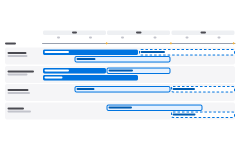
The bars are drawn in three styles, explained in the legend at the bottom. A solid bar is committed: funded and staffed. A light bar with an outline is planned: in the plan, not yet funded. A dashed outline is exploring: an idea being tested.
Read the board left to right and the styles shift. In 2027 the solid bars dominate: Highway corridors, Plug and charge everywhere, the 99% uptime program. By 2029 the bars are dashed: Rural sites with state grants, Workplace charging plans, Sell power back to the grid. That gradient is honest. It lets you show a three-year view without pretending that year three is settled.
How to use the strategic roadmap template
- Open it as a new board. Amp Charge’s roadmap is in your copy as a pattern.
- Set the milestones first. Change the three diamonds to the results you must reach, and slide them to the right half-year.
- Name three or four themes. Rewrite each lane’s title and its one-line promise.
- Add initiatives with a number in them. "City hubs in 10 metros" and "Battery storage at 50 sites" can be checked later; "expand in cities" cannot. Stretch each bar across the halves it covers.
- Restyle each bar by commitment. Make it solid only when money and people are assigned. Use the dashed Add an initiative bar for ideas still under test.
Review the board twice a year: move bars from planned to committed, and let the exploring ones either firm up or disappear.
When a strategic roadmap helps, and when to choose something else
Use it for a board meeting, a funding round or a company kickoff: any time you must explain several years on one page to people who do not need the detail.
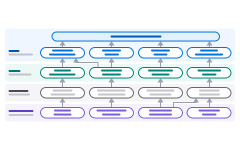
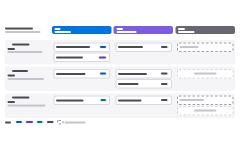
For a single product’s features, a now-next-later roadmap is lighter and avoids dates altogether. To plan the coming twelve months month by month, switch to annual planning. And if you want to show how objectives cause one another, not when they happen, draw a strategy map.
Questions about the Strategic roadmap template
How far ahead should a strategic roadmap look?
Two to five years for most companies; the template shows three. Go only as far as you can name a believable milestone. If the last year has no milestone and only dashed bars, cut it.
What is the difference between a strategic roadmap and a product roadmap?
A product roadmap covers features and releases of one product, usually over months. A strategic roadmap covers the whole organization over years, and its bars are large efforts such as entering a region or reaching break-even. Product roadmaps are often derived from one lane of the strategic one.
Should initiatives on the roadmap have exact dates?
No. Place them by half-year, as the template does. Exact dates belong in project plans for committed work. On a multi-year view they create promises that the later, less certain bars cannot keep.
How many initiatives belong in one theme?
Two to four. The example has two or three per lane and ten in all. A lane with seven bars usually hides two themes, or lists projects that are too small for a multi-year view.